
News and Media
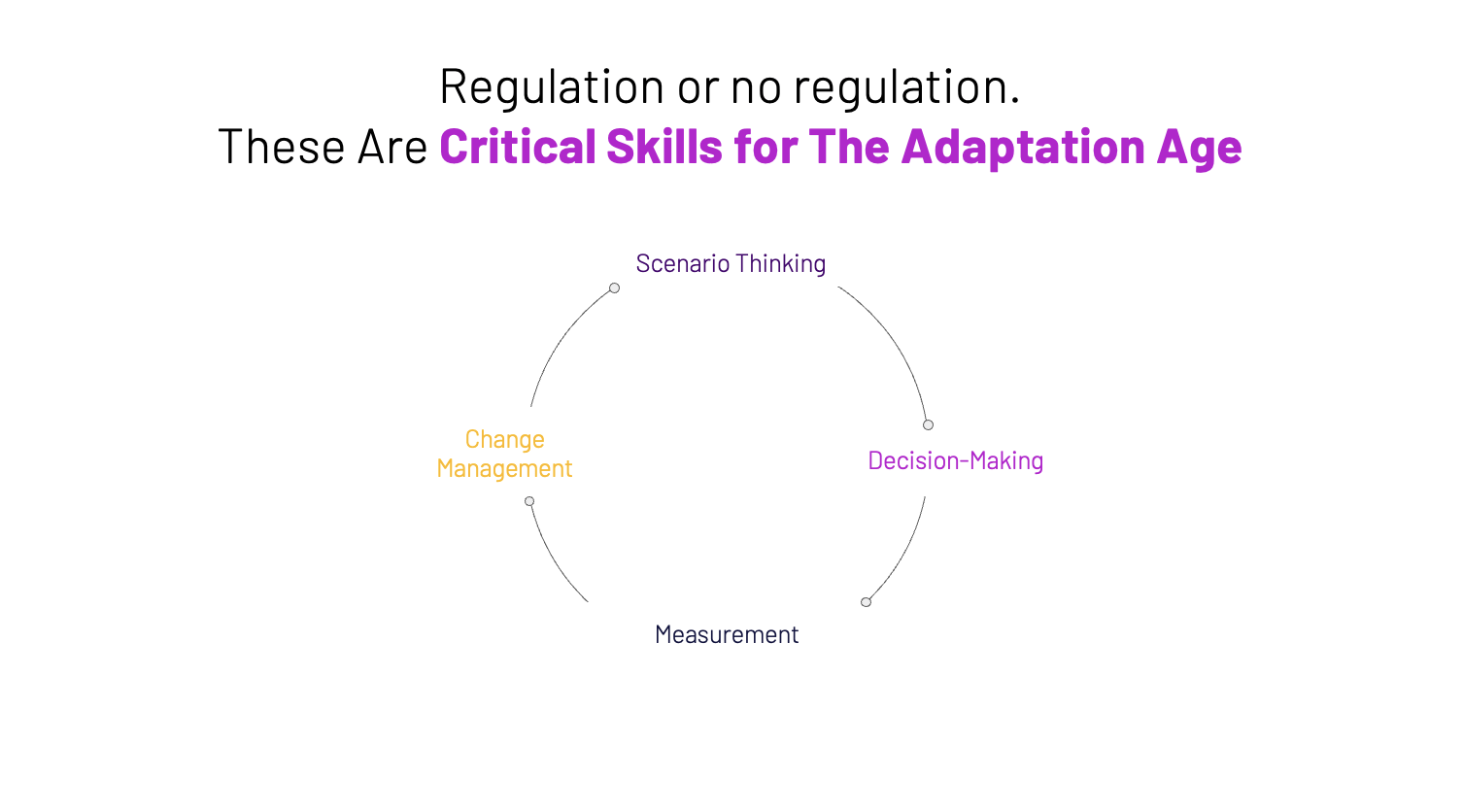
We are living in The Adaptation Age—a time when risk is more unpredictable and fast-moving than ever, and the ability to pivot and respond is more critical than rigid plans. Organizations can no longer rely on static strategies and once-a-year exercises to stay ahead.
Resilience isn’t built in a single moment—it’s developed through practice, iteration, and continuous learning.
At iluminr, we help organizations bridge the gap between theory and action using Microsimulations and real-time response capabilities. Whether in a safe, controlled environment or an actual crisis, iluminr's SAFE framework (Situation, Action, Follow-through, Effect) ensures teams are prepared to navigate risk effectively.
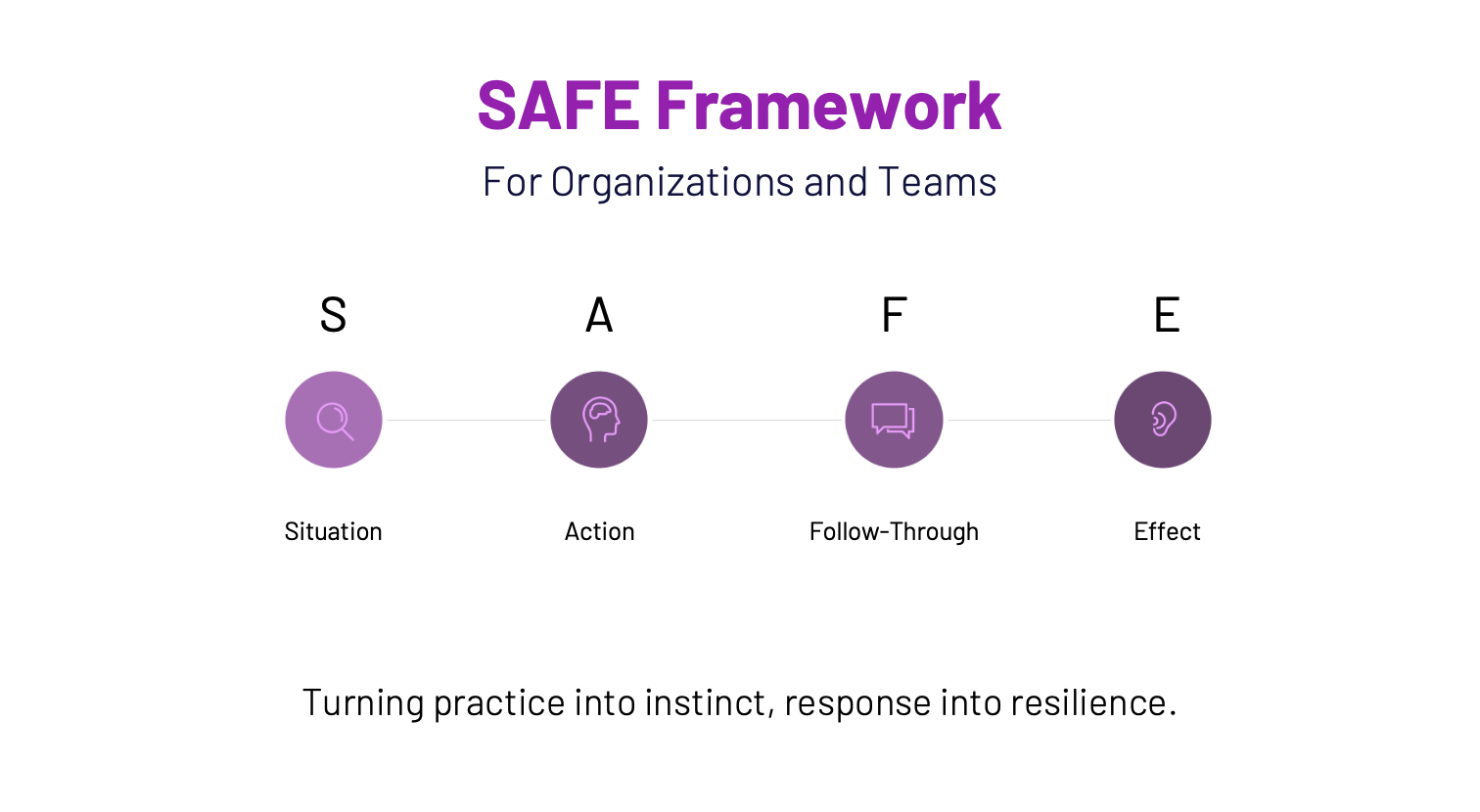
SAFE in Microsimulation: Building Response Muscle Memory
Microsimulations create realistic, bite-sized crisis scenarios that allow teams to practice decision-making, test response strategies, and learn from their actions—without real-world consequences.
S – Situation (Scenario)
Every Microsimulation starts with a set of objectives and a realistic risk scenario—whether it’s a cyber breach, misinformation campaign, or AI-powered fraud attempt. This immerses teams in a dynamic decision-making environment, forcing them to think critically under pressure.
Example:
A global retail company runs a Microsimulation where a ransomware attack threatens customer data. The team must determine if they pay, negotiate, or execute a containment strategy—building the confidence to act decisively in a real event.
A – Action (Task)
Once the scenario is set, participants take action. Each decision affects the unfolding situation, requiring teams to assess risks, coordinate responses, and execute their playbooks in real time.
Example:
A financial institution runs a deepfake fraud Microsimulation. The fraud team must authenticate transactions, escalate the issue, and determine the right level of customer communication—replicating the pressure of a live incident.
F – Follow-through (Learning Loop)
The power of Microsimulations lies in repetition and feedback. iluminr’s learning loop provides teams with immediate insights into their decisions, helping them refine their approach.
Example:
After running a social engineering attack Microsimulation, teams analyze response times, escalation effectiveness, and decision accuracy, allowing them to pinpoint gaps and improve readiness.
E – Effect (Changes to Pull Forward)
Microsimulations are only effective if they lead to meaningful change. By translating lessons learned into actionable improvements, organizations can enhance their response strategies, policies, and team coordination.
Example:
A manufacturing company realizes that its incident response escalation is unclear after a cyber-physical attack Microsimulation. They update their communication protocols to improve speed and clarity in a real event.
SAFE in the Real-World: Applying Lessons Under Pressure
When a real crisis unfolds, teams must move from simulated practice to live execution. The SAFE framework ensures they can apply what they’ve learned to minimize impact and recover faster.
S – Situation (Real Incident)
Instead of a set of learning objectives and a simulated scenario, teams face an actual disruption—be it a cyberattack, regulatory breach, or misinformation event.
Example:
A financial institution detects a real deepfake scam targeting high-net-worth clients—similar to the Microsimulation they ran. Their objective is to address the threat and mitigate the situation.
A – Action (Response Execution)
Decisions must be made in real-time, with real consequences. Teams use pre-built playbooks and response workflows to contain the crisis, protect assets, and mitigate harm.
Example:
The financial institution immediately triggers its fraud response playbook, alerting the right teams and blocking suspicious transactions—minimizing losses.
F – Follow-through (Post-Incident Review)
After the incident, a structured after-action review helps teams analyze what worked, what didn’t, and how to improve for the future.
Example:
The financial institution assesses communication gaps during the deepfake attack, identifying areas to improve fraud detection and escalation speed.
E – Effect (Strategic and Tactical Improvement)
The final step is ensuring the lessons learned don’t just stay in a report—they drive real change. This could mean updating response protocols, enhancing cross-team coordination, or reinforcing employee training to build long-term resilience.
Example:
Following the deepfake scam, the financial institution realizes that frontline staff hesitated to escalate suspicious activity because they feared being wrong. To fix this, they introduce "See It, Flag It", a simple, no-blame reporting system that encourages employees to flag potential fraud without repercussions. They also run a follow-up Microsimulation to reinforce quick decision-making under pressure. Weeks later, a junior employee confidently identifies and stops a similar scam before any money is lost—proving that small changes can have a massive impact.
Closing the Loop with the SAFE Framework
True resilience means building the capability to respond effectively in high-stakes situations.
iluminr's SAFE framework ensures organizations can:
✅ Train through immersive Microsimulations before crises occur
✅ Execute confidently and dynamically under real-world pressure when incidents happen
✅ Improve continuously through Learning Loops
✅ Apply lessons learned to build a stronger, more adaptable response capability
Are your teams really ready? Let’s put them to the test.
Microsimulations
Crisis Leadership
Critical Response