

Artificial Intelligence
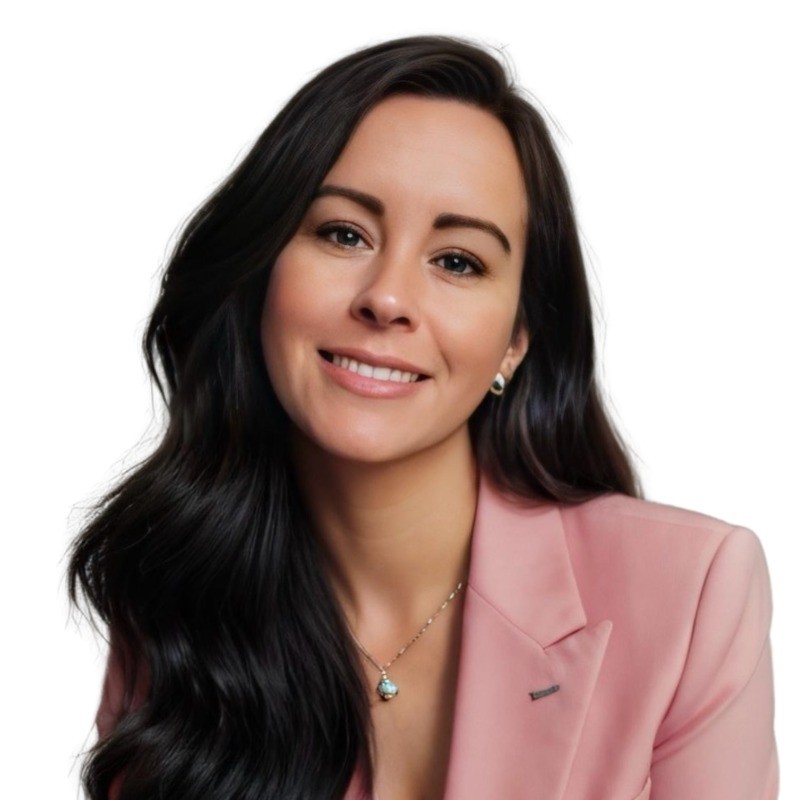
Rachael Fisher, Senior Customer Success Manager, on five years at iluminr, what executives taught her, and why the even best metrics still can't always see around corners like people can.
In brief
Rachael Fischer is a Senior Customer Success Manager at iluminr. Over five years she has watched the discipline shift from annual exercises and audit checklists toward whole-organization capability. In this interview she shares how she earns trusted-advisor status, what her years as an executive assistant taught her about working with senior stakeholders, and why she treats data as a lead indicator instead of the whole story.
The road in
Q: How did you end up in customer success?
Rachael: I have a background in admin, project management, and client management. I spent four years at an employment relations law firm that also ran an HR platform, and I helped launch one of their brands, packaging legal services, the platform, and insurance into an annual subscription. That sparked my love of all things technological. I then followed one of the partners to a recruitment and staffing association, where I did partnership management, events, and membership engagement for another four years. During COVID I was ready for a new challenge, and that is when I learned about customer success as a discipline. I applied to do a graduate certificate in it. When I saw the ad for iluminr, it was clearly written by a human rather than the usual recruitment boilerplate, and that piqued my interest. It was a perfect intersection of data analytics, project management, the technical element, and the people side. My love is people and systems, and that is exactly where I get to work now.
Q: How has iluminr evolved over your five years?
Rachael: It has certainly changed. It was CQ Command when I started, that is how far back it goes. We launched the threat map under the iluminr name, then made the decision to brand the whole organization as iluminr. The platform has gone from a critical response and mass communications tool into something with far more capability. Early conversations were about your annual exercise, your tabletop, your auditing requirements. Now we talk about the broader responsibility of risk and resilience across a whole organization and every player in it, rather than a select few at the executive level or inside the risk and resilience function. The profile of people I work with has changed, and so has the discipline itself.
Building the muscle
Q: How do you help a customer see progress when the work is about things that haven't happened yet?
Rachael: We are pretty accurate with our magic 8 ball. It is rare that we discuss something and it does not come to fruition within a year or two. I remember talking about severe hurricanes and cyclones only with our clients in the States, and then we had one down in little old Australia that we would not normally see. We talk about earthquakes in New Zealand and across APAC, and we have had so many disruptive ones since I started. Same with newer threats like AI deepfakes. I have lost count of the times a client has shared an article after an event and said, we exercised this, we validated it, so when it hit we actually knew what we were doing. The skills they build aren't specific to one threat. What you do for a physical security issue does not really depend on the exact trigger. It is about your responses, how you manage, and whether you have even considered what decisions you will need to make before you are in the hot seat.
Q: Was there a moment that changed how you think about your role?
Rachael: I think about my role much more as an enablement and a conduit for the customer's capability. I used to feel like an educator handing people the big, bad, ugly things they needed to think about. Now I start from where they are. What are you concerned about? What are you experiencing? What capability gaps can we work on as a muscle, so the memory is there when these things actually occur? I feel like a redirector of that energy.
Q: Do customers expect a different kind of partnership from providers now?
Rachael: There is an expectation now that providers understand your business, your sector, and the politics inside your organization. There is a real appetite for exercising everyone in the organization, but rarely is there a framework already in place for risk and resilience that broad. If I am in logistics, I do not want to hear what you did with a bank. I want to hear about things specific to me and the challenges I face. That has to be second nature.
Growing into the role
Q: Moving from CSM to Senior CSM, what did you have to unlearn?
Rachael: I had to unlearn implementing a roadmap and start creating one. In my own mind I had to flatten any expectation of what normal was, then define what the best looked like. People carry a lot of inherent bias about how things were and how they should be, the status quo. To flourish, I had to set the strategic lens myself.
Q: Which of your earlier roles influenced youmost in how you work today?
Rachael: Surprisingly, the executive assistant role. Working with senior stakeholders gave me a unique set of skills in how to manage those conversations, read between the lines, and still get the right response. Walking into the room and telling executives how things need to be is never going to land. Having been an EA, I understand the inner workings and what a day in their life looks like. So when I come to the table, I am solving a problem they have, communicating in a way that sticks, and making it easy for them to make decisions.
What good looks like
Q: If you were hiring another senior CSM, what would you screen for that doesn't show up on a resume?
Rachael: You cannot convey how personable someone is on a CV. Making people feel comfortable, opening dialogue, and quickly building trust is very hard to show on paper. I would want someone who is genuinely accepted by customers, who builds trust, and who wants to partner with them. A lot of my success has been my client and me against the problem.
Q: What does "trusted advisor" mean to you in practice?
Rachael: Getting the truth of the situation. You cannot be a trusted advisor if people aren't comfortable telling you the good, the bad, and the ugly. It means being treated as an expert, or at least a conduit, and being able to share what other organizations are doing while protecting their anonymity. Part of the benefit of being in the iluminr network is that you get someone like me who sees behind the wall of challenges across many organizations. It also comes down to delivering on exactly what you say. If I did not follow through, I would not have earned the advisory role, especially as a non-practitioner. I have not done risk and resilience as my one job, but I have been through plenty of crises and I sit in with all of our customers on theirs.
Q: Tell us about a time a customer relationship was at risk.
Rachael: I had a customer at risk purely on engagement. They were not logging in or using the product, and they did not really understand where the roadmap was going. My approach was to reconnect and re-establish myself as a trusted advisor: acknowledge what they had done, then build the vision of where we were heading and bring them along. It was a multi-year contract drifting in the background, almost on life support. I came back with situations ripped from the headlines and showed how each one might hit them, then mapped the capability and features that would make their life easier against those pain points. That is what brought it back to life, hearing them say, we can't live without this.
Judgment, and changing your mind
Q: What's a widely shared piece of CS advice you think is wrong?
Rachael: That the analytics will tell you everything. Data gets more headline than it should. It is treated as cold, hard fact, but how you capture it, what it is actually telling you, and the story we think we are getting from it is rarely as clear as we assume. Organizations want big models around health and engagement scoring, monthly active users, active accounts. Those are lead indicators, but people can log in, get frustrated every single time, and still go through the motions. There is always a human element to customer success. I love the data, but it gets talked about as the one miracle cure.
Q: When have you had to choose between a clean systems solution and a pragmatic one?
Rachael: Standing up a program, you want a systematic approach: here are the personas, here is what good looks like, here is the ideal rollout. Then pragmatism says, we have this unmovable event, this unshakable stakeholder, this challenge in the way, so how do we actually get through it?
Q: What have you changed your mind about in the last year?
Rachael: My approach to AI. I started with an all-or-nothing view: you are either using it or you are not, internally or externally. Now I am far more pragmatic. It can be used for particular things, in stages. For the higher-risk pieces we put vetting and quality controls around it. Pick it up for that, rather than involving it everywhere at once.
What's next
Q: What are your hopes for the role going forward?
Rachael: I want to experience real growth. What attracted me to iluminr was that intersection of the technological and the people side. I want to see what we can do with insights and analytics, and genuinely change the industry. Risk and resilience has been ready for a new way of doing things for a while. I have plenty of clients who will happily say the status quo is not for them. They do not have the solution, but they want to trial, invent, and do whatever it takes to flip it on its head. I want to be part of those sweeping changes, and to support clients through an ever-changing threat landscape.
Q: And outside work?
Rachael: I love getting out into the forest, going for walks. It is a beautiful part of the world down in Melbourne, and stepping away from technology matters. I am pretty active online, with work and connecting with others, so having time to disconnect is what lets me show up at 110 percent when I need to.
Looking for more insights from Rachael Fisher? Watch her Product Masterclass Scenario Exercising at Scale with customer and Gamechanger Sue Chapman, Resilience Leader at PHF Science.

.png)